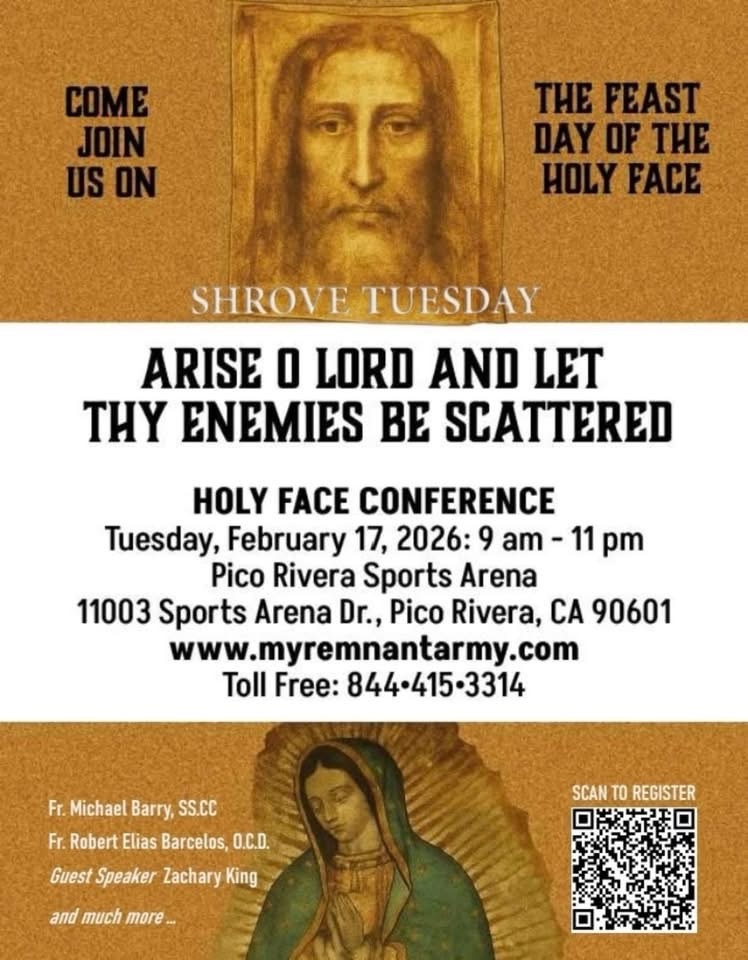
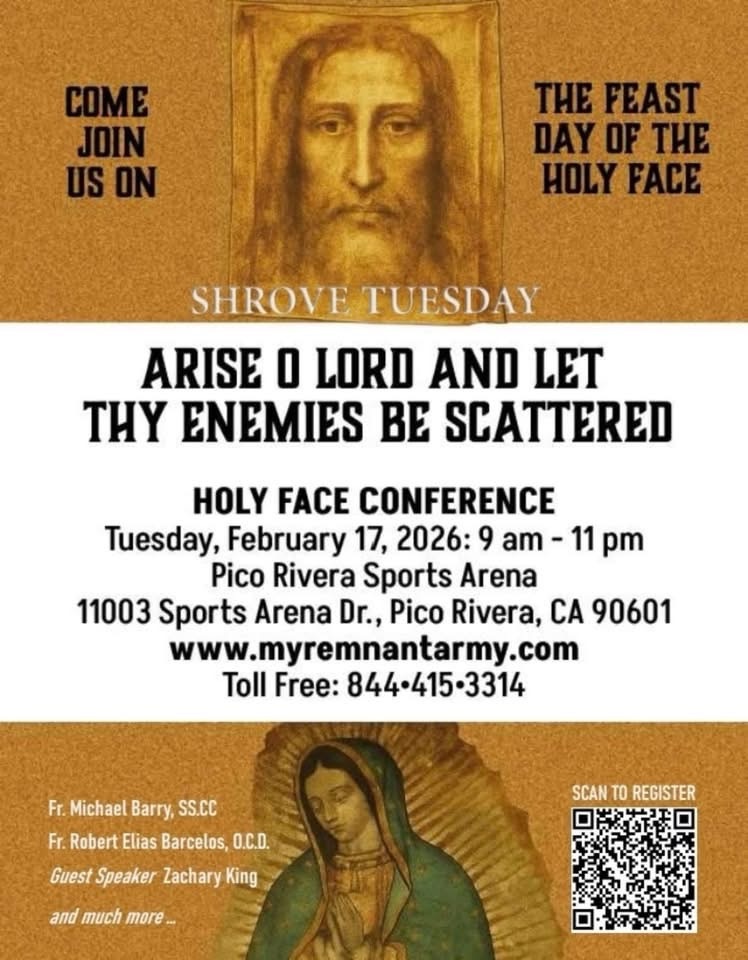
Holy Face Conference | Shrove Tuesday, February 17, 2026
Pico Rivera, California (Los Angeles area)
I’m honored to share that I will be opening the Holy Face Conference on Shrove Tuesday, February 17, 2026, in the Los Angeles area, hosted by My Remnant Army.
This conference is a full day of prayer, reparation, and conversion, centered on the Holy Face of Jesus — a devotion that calls us to console Christ, whose Face continues to be wounded in our time, especially through violence against the unborn and the rejection of human dignity.
I will be offering the opening talk, helping set the spiritual tone for the day as we move into the Holy Rosary, Holy Mass, Confessions, testimonies, and acts of reparation. The day will include multiple Masses, Confessions, veneration of Holy Face relics, Divine Mercy and Holy Face chaplets, and powerful witness from faithful priests and speakers.
📍 Location: Pico Rivera Sports Arena (Los Angeles area)
📅 Date: Shrove Tuesday, February 17, 2026
🕘 Time: 9:00 AM – 10:30 PM
This gathering is not about politics or slogans.
It is about reparation, mercy, and truth — responding to the wounds of our time with prayer and fidelity to Christ.
If you are in Southern California, I invite you to attend. If you are not able to be there in person, I humbly ask for your prayers for all who will gather, speak, and encounter Our Lord through this devotion.
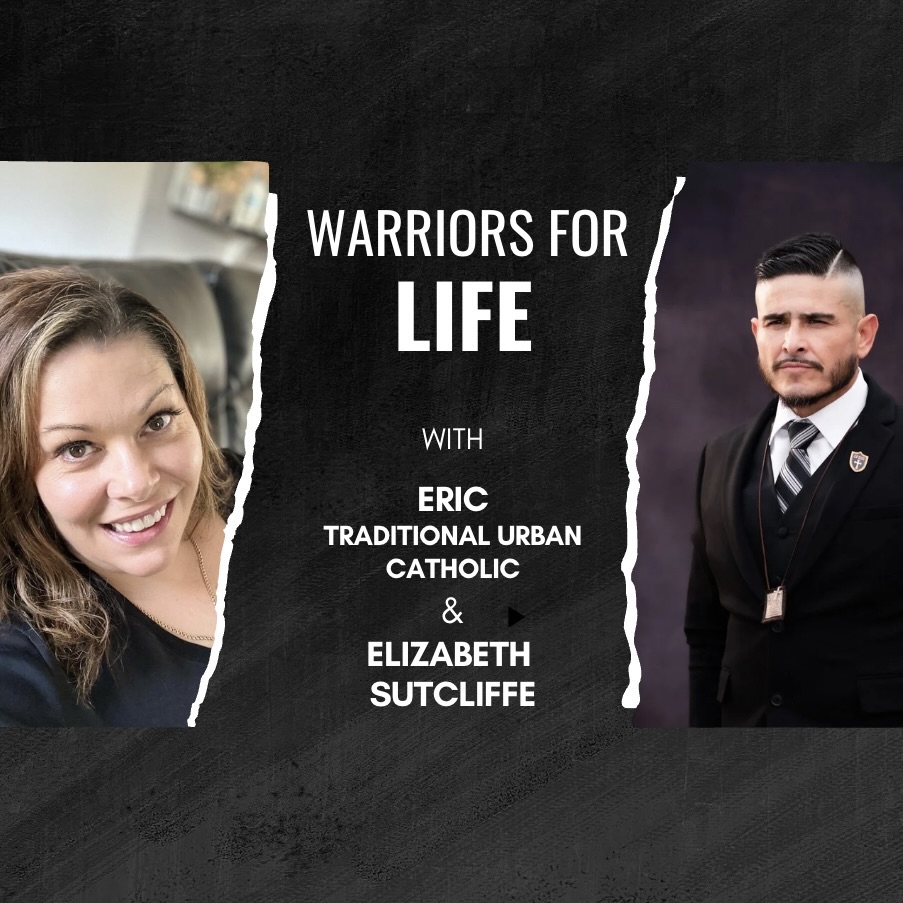
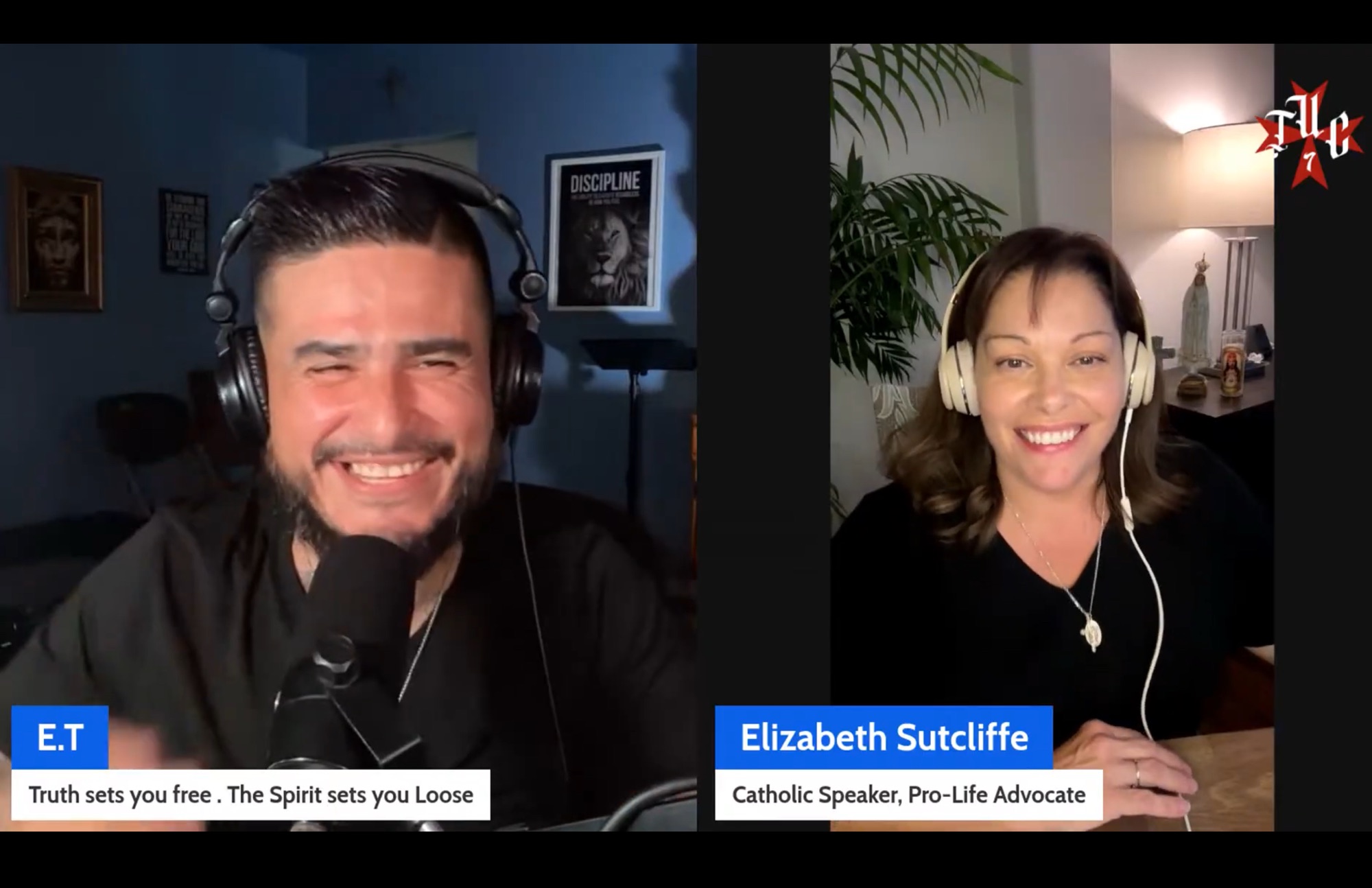
This Thursday at 7:00 PM Pacific, a new episode of Warriors for Life will be released — and it’s one of the most important conversations we’ve had.
Too often, the realities surrounding abortion are hidden beneath slogans and silence. But behind many abortion stories is something far more painful: violence, coercion, fear, and abandonment.
In this upcoming episode, Eric and I open a necessary and compassionate conversation about how women are often pushed toward abortion — not because they truly choose it, but because they feel they have no other option. We speak honestly about how abortion can shield abusers, silence victims, and deepen trauma rather than heal it.
This is not about condemnation. It’s about truth, protection, and mercy.
We talk about:
How violence against women often precedes abortion
Why abortion can become a tool that protects abusers rather than victims
The emotional and spiritual aftermath many women quietly carry
How healing begins when truth is spoken in love
This episode is for: • women who have felt pressured or silenced • men who want to protect, not harm • parents raising sons and daughters in a broken culture • anyone who believes women deserve better
If you’ve ever felt the weight of these realities — or wondered how to respond with compassion and courage — this conversation is for you.
🔔 Be sure to subscribe and turn on notifications so you don’t miss it.
💬 A gentle note
If this topic touches something tender in your heart, please know you are not alone. Healing is possible. Hope is real. And your life — and your story — matter.
From silence to strength. From fear to freedom. We are Warriors for Life.
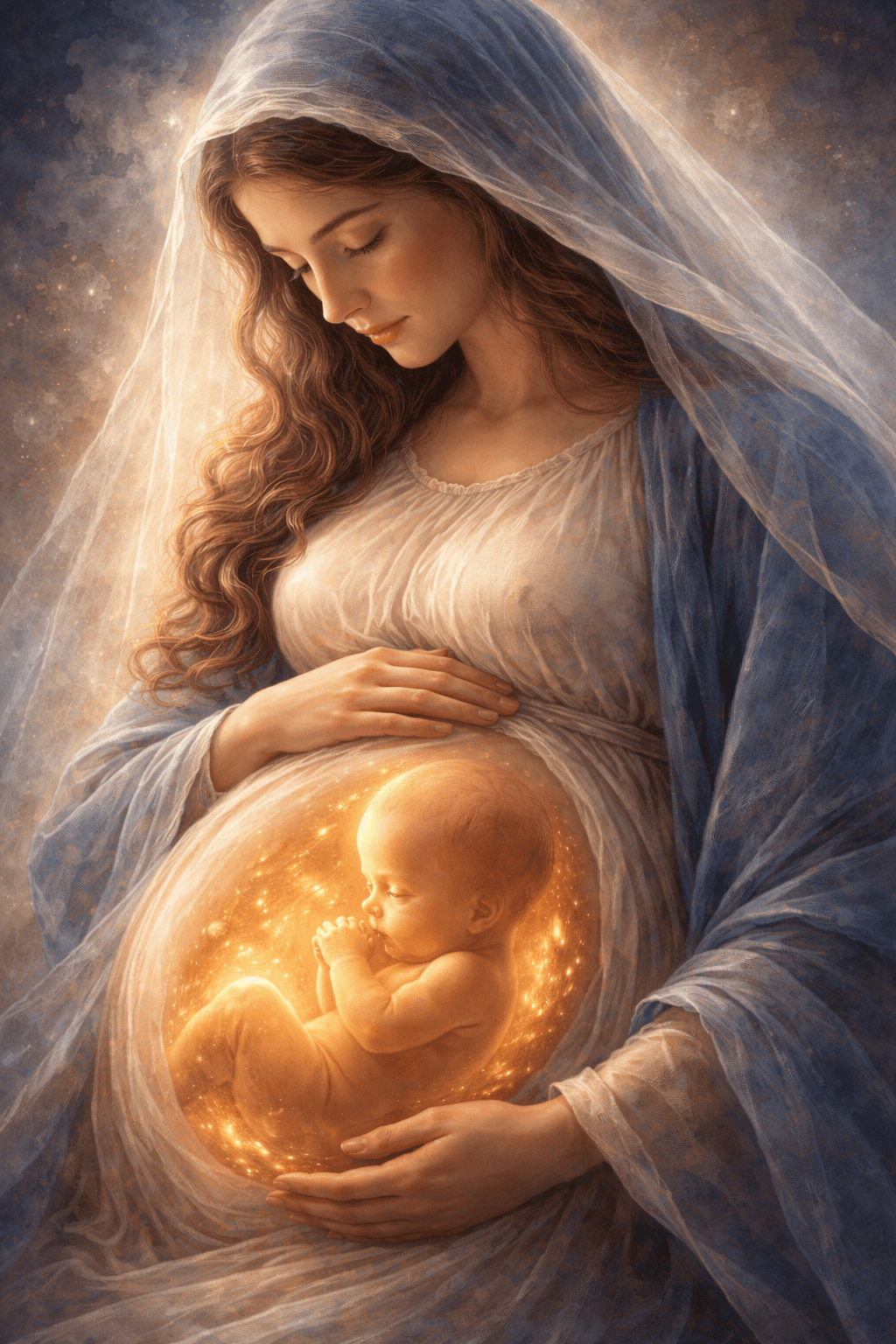
On this Christmas Eve, we return to a scene so familiar that we risk forgetting how radical it truly is. A young woman—very pregnant—rides a donkey through the cold night. A quiet, faithful man walks beside her. And within her womb is not only a child, but the Life, the Word, and the Truth Himself.
Mary was not merely carrying a baby. She was carrying Christ. And that matters—especially today.
Scripture tells us that King Herod sought to destroy the Child. But let us be precise about what he sought to destroy. Not an idea. Not a philosophy. Not a future movement. He sought to destroy Life. He sought to silence the Word. He sought to extinguish the Truth—before the Truth could even speak. Herod feared Christ not because He had spoken yet, but because He existed. That alone should give us pause.
Tonight, we contemplate a profound mystery that the modern world is uncomfortable naming: Christ, in Mary’s womb, was fully conscious—fully present, fully aware, fully alive. He knew where He was. He willingly accepted the confinement, vulnerability, and dependence of the womb. The Creator of the universe humbled Himself to dwell there. And if Christ—fully God and fully man—was conscious in the womb, what does that tell us about the nature of human life?
We are made in the image and likeness of God. That truth is not poetic sentiment; it is theological reality. If Christ’s life in the womb was real, relational, and aware, then the lives formed in the womb today share in that same dignity. We do not become human at birth. We do not suddenly awaken to personhood once we pass through the birth canal. We are image-bearers from the beginning.
We see this the moment a child is born. A newborn placed on its mother’s chest is calm, while that same baby placed on a stranger’s chest will cry. Why? Because the child knows. It recognizes her heartbeat—the one it lived beside for months. It recognizes her voice—the one it heard from within the womb. It recognizes her scent—the one that signaled safety and life. This knowing did not begin at birth. It began before. Consciousness does not suddenly appear. Relationship does not suddenly form. Awareness does not magically arrive. It was already there.
On that first Christmas Eve, the world faced a choice: to protect the vulnerable Life, or to justify the power of a ruler who claimed the right to decide who may live. Herod chose power. Mary chose trust. Joseph chose protection. God chose humility.
Tonight, we face that same choice. In Canada and throughout the world, we live in a culture that increasingly defends the right of modern-day Herods—the authority to determine whose life has value, whose life is inconvenient, and whose life may be ended. But Christmas tells a different story. It tells us that Life is not granted by kings, courts, or cultures. Life is given by God. And the smallest, quietest lives are often the most dangerous—to evil.
So tonight, as candles are lit and carols are sung, we must ask ourselves honestly: Are we protecting the Life, the Word, and the Truth? Or are we quietly siding with Herod—comforted by power, policy, and permission?
Christmas does not allow us to remain neutral. The Truth entered the world in the womb of a woman, and the world responded then as it often does now. But Mary said yes. Joseph stood guard. And Christ came anyway.
May we have the courage, in our time, to recognize who is good and who is evil—and to choose Life.
I’m honored to share that my latest article has been published by Live Action News, one of the leading pro-life media outlets in North America.
In “Canada Serves as a Reminder to Americans to Stand for Life,” I draw on both lived experience and documented facts to warn Americans about where unrestricted abortion laws inevitably lead—using Canada as a real-time case study.
Canada currently has no legal protections for preborn children at any stage of pregnancy. Late-term abortions are not only permitted but quietly happening, funded by taxpayers, and largely hidden from public scrutiny. What many Americans don’t realize is that Canada was once where the U.S. is now—divided, complacent, and trusting that “it could never go that far.”
It did.
As a Canadian pro-life advocate and post-abortive mother, I’ve watched my country become a cautionary tale. This article is a call to Americans to pay attention, stay engaged, and refuse to surrender moral ground, even when the cultural pressure feels overwhelming.
This piece is not written to shame or inflame—but to inform, warn, and awaken. Silence is what allowed Canada to reach this point. Truth is the only way back.
Thank you to Live Action News for publishing this important work and for continuing to report on stories that many media outlets refuse to touch.
If this article resonates with you, I encourage you to share it, discuss it, and use it as a starting point for meaningful conversations—especially across borders. What happens in one nation rarely stays there.
Canada has long been portrayed as a polite, harmless nation — a place where political tensions are mild and moral debates simmer quietly. But beneath the calm veneer lies a truth that should concern not only Canadians, but also our American neighbours and every nation watching global trends on human rights, law, and medical ethics.
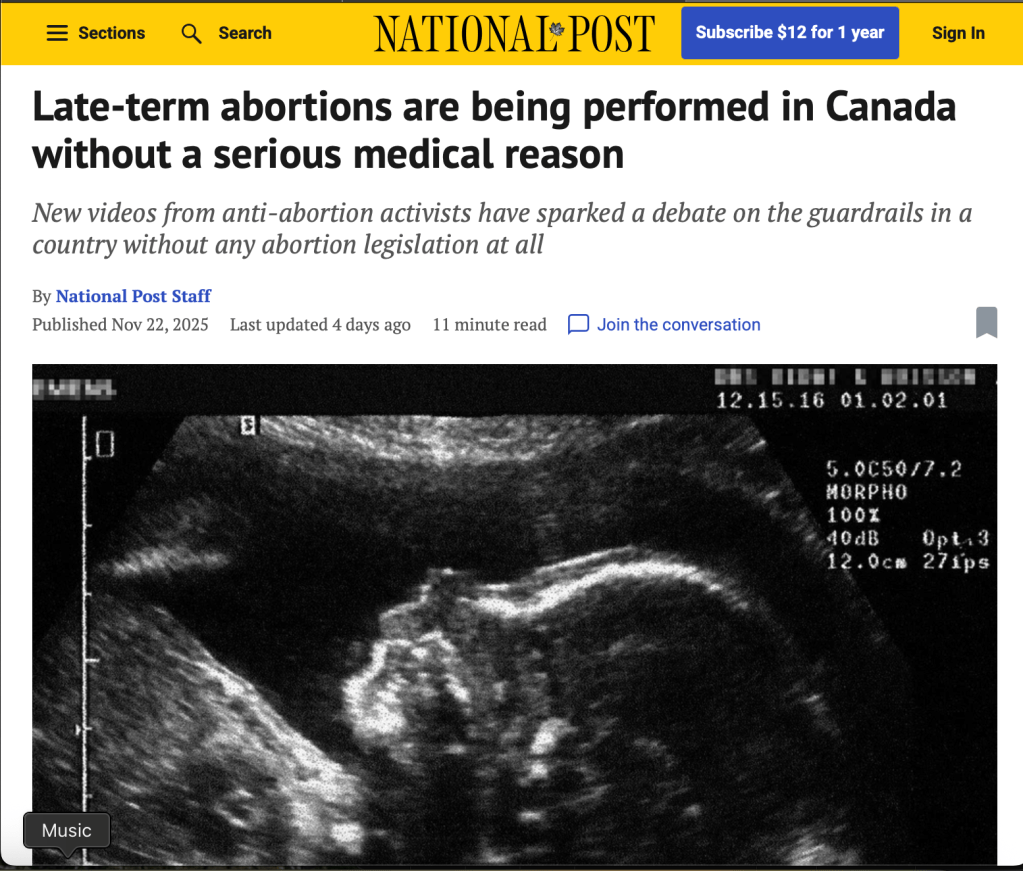
Tomorrow at 5:00 PM PT, we will go live on Warriors for Life to discuss one of the most consequential investigations to emerge in Canada’s pro-life landscape: the undercover exposé conducted by RightNow, revealing how late-term abortions are being accessed in Canada with virtually no oversight.
This isn’t just a Canadian issue. It is a canary in the coal mine for the United States — and a warning to every nation that thinks “it could never happen here.”
RightNow’s Undercover Investigation: What They Found
RightNow Canada recently went undercover to test a claim that Canadian leaders, major media outlets, and abortion-rights advocates have repeated for decades: “Late-term abortions are rare and only performed for serious medical reasons.”
The investigation revealed something very different.
RightNow’s team found that:
Late-term abortions are available in Canada, including well past the point of viability.
No legal gestational limit exists, meaning abortion is permitted until birth for any reason.
Clinics were willing to discuss late-term options without requiring medical necessity.
Staff openly described multi-day procedures and cross-border referrals.
This report has sent shockwaves across the country — and it should. It exposes the reality behind a legal vacuum unique in the Western world.
The National Post’s Reporting: A Wider Lens
The National Post published a detailed article examining Canada’s late-term abortion landscape and the ethical, political, and medical questions it raises. It references the data, the public perception, and the debate around how these procedures are justified and accessed.
This article confirms what many Canadians do not know: Canada is one of the only countries on Earth with absolutely no legal restrictions on abortion at any gestational age.
The Responses: A Nation Split
RightNow’s investigation has sparked a national conversation that cuts across political and ideological lines:
Pro-life advocates
Say the investigation confirms what they’ve warned for decades: Late-term abortion in Canada is unregulated, under-reported, and far more accessible than the public is led to believe.
Pro-choice organizations
Have attempted to dismiss the investigation as “misleading” or “selectively edited,” insisting that late-term procedures are rare and medically necessary.
Government officials
Repeat the same line: “Abortion is a legal healthcare service with no gestational limits, decided between a patient and her provider.”
And that is precisely the problem.
Why This Matters for the United States (and Everyone Else)
The United States is already in a political firestorm over abortion laws, state-by-state battles, and court challenges.
Canada’s situation provides a chilling preview of what happens when:
No gestational limits exist,
No reporting requirements are mandated,
No parliamentary oversight is enforced,
And abortion ideology replaces medical ethics.
This is why Canada is the canary in the coal mine.
If it can happen quietly here, under the radar, it can happen in the U.S. — and beyond.
Take Action: Raise Your Voice
RightNow has launched a petition calling for urgent legislative change. Add your voice here: 👉 https://www.itstartsrightnow.ca
Join Us Live — Warriors for Life
Tomorrow night, November 27th at 5:00 PM PT, we will break all of this down on Warriors for Life.
We’ll look at:
What the investigation uncovered
How clinics are operating under zero legal limits
What this means for unborn children
Why Americans should pay close attention
How Canadians can respond with truth, courage, and conviction
Truth doesn’t tremble when the world grows dark — it shines brighter. RightNow’s investigation is forcing us to look at what has been hidden, ignored, or dismissed for far too long.
Tomorrow night, we’re bringing that truth into the light.
What My Mother’s Journey Is Teaching Me About Love, Suffering, and Faith
Caring for a loved one at the end of life can break and transform us all at once. In this reflection, Elizabeth Sutcliffe shares how walking with her mother through dementia and physical decline has deepened her understanding of dignity, mercy, and the sacredness of every human life.
The Cross of Love
I’ve been walking through one of the most painful and grace-filled seasons of my life. My mother, who has lived as a paraplegic since I was twelve, was diagnosed with Alzheimer’s four years ago and dementia a year ago. Recently, her condition has worsened, and we’ve been faced with the difficult decision of transitioning her into full-time care.
Each day feels like a new invitation to love in ways that hurt — to choose tenderness when I’m tired, patience when I’m afraid, and faith when I don’t understand why God allows suffering like this.
Learning Dignity in the Midst of Decline
Watching my mother’s body and mind fade has forced me to confront what the world often refuses to see: that human dignity is not measured by productivity, memory, or mobility. It’s intrinsic — written into us by God from conception until natural death.
When I was younger, I thought dignity meant independence. Now I understand it’s about dependence — on God, and on one another. My mother’s vulnerability has become a teacher, showing me that the beauty of life doesn’t disappear in decline; it’s simply revealed in a different way.
Faith That Holds When Words Fail
There are days I can’t find the words to pray. The exhaustion, grief, and worry over what’s next can feel like too much. But in the silence, I remember that even when our prayers become tears, they still reach Heaven.
This journey is teaching me to trust God in the mystery — to believe that the same love that formed us in the womb holds us as we leave this world. My mother’s suffering has become, in a hidden way, her final witness to the Gospel: that love sacrifices, endures, and redeems.
The Gift of Community and Faith
No one walks this road alone. I’ve seen the power of community — the nurses who come daily, the friends who pray, the Church that reminds us our suffering is not meaningless. These moments make me grateful for the faith my parents passed on to me, the same faith now sustaining us as we walk this valley together.
In every act of care, from turning her in bed to brushing her hair, I’m reminded of Christ’s words: “Whatever you did for one of the least of these, you did for Me.”
Reflection: Finding Christ in Suffering
If you’re walking through a similar season, know that you are not alone. The cross you carry may be heavy, but Christ is carrying it with you. The dignity of your loved one — and your own — is rooted in His image.
Take heart in knowing that this suffering, offered in love, can become a prayer that changes eternity.
A Prayer for Caregivers
Lord Jesus,
You who carried the cross with love,
Be with those who carry the weight of caregiving.
Teach us to see Your face in the ones we serve,
To love without counting the cost,
And to find hope in the promise of Your mercy.
Amen.
About the Author
Elizabeth Sutcliffe is an author, Catholic speaker, and pro-life advocate sharing a message of truth, healing, and hope. Through her ministry Elizabeth Speaks Truth, she offers talks, podcasts, and reflections on faith, mercy, and the dignity of life.
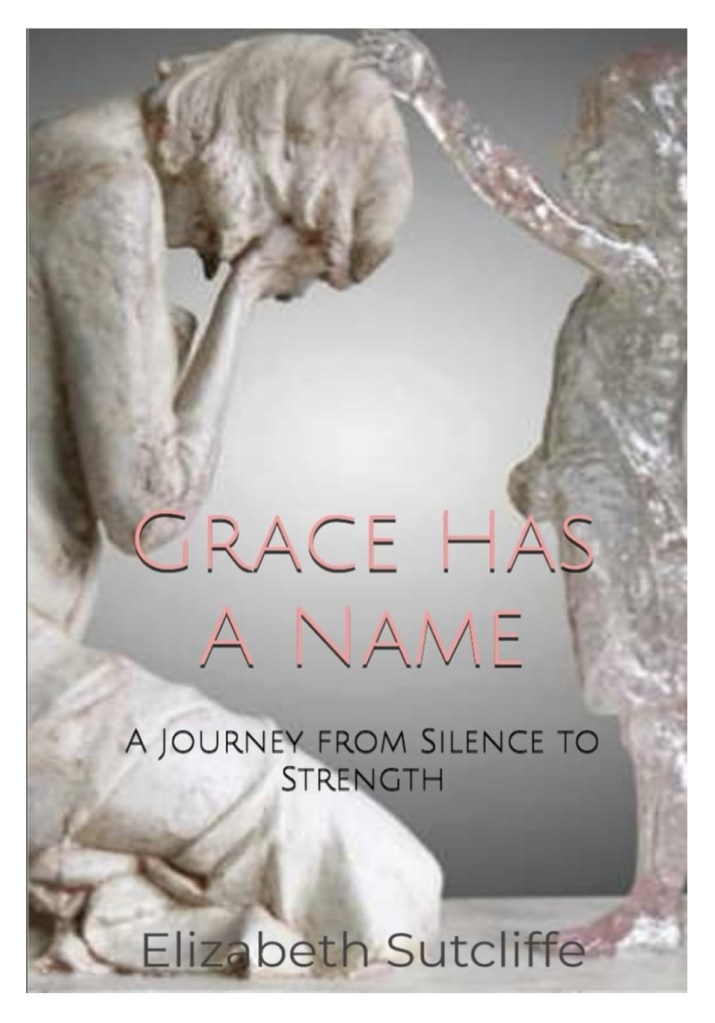
After years of prayer, reflection, and healing, I’m overjoyed to announce that my book, Grace Has a Name: A Journey from Silence to Strength, is now officially available on Amazon.
This is more than a book — it’s the story of how God turned my deepest pain into a mission of hope. In 2001, I made a decision that would forever change my life. For years, I carried the hidden wounds of abortion — the grief, the silence, and the belief that I could never be forgiven. But through the mercy of Jesus Christ, I discovered that even the darkest chapters can become testimonies of His grace.
This memoir takes you through that journey — from heartbreak to healing, from silence to strength. It’s a story for anyone who has ever felt broken, unworthy, or far from God’s love. Through the pages, I share how confession, prayer, and the mercy of the Divine Physician transformed not only my life, but also the way I see every human soul: as fearfully and wonderfully made.
📖 Grace Has a Name is now live on Amazon (retail price: $29.99 USD).
I will also have copies available at my upcoming talks and ministry events for those who prefer to purchase directly.
My prayer is that this book brings comfort to the wounded, courage to the silent, and strength to those ready to speak truth in love. Because when we allow God to heal us, He doesn’t just restore us — He redeems our story for the salvation of others.
“Don’t wait until you’re healed to speak — your wounds might be the very thing God uses to reach someone else.”
Thank you to everyone who has prayed, encouraged, and walked beside me on this journey. From the first word written to the first book printed, this has been a work of grace from beginning to end.
“Choose life, then, that you and your descendants may live.” — Deuteronomy 30:19
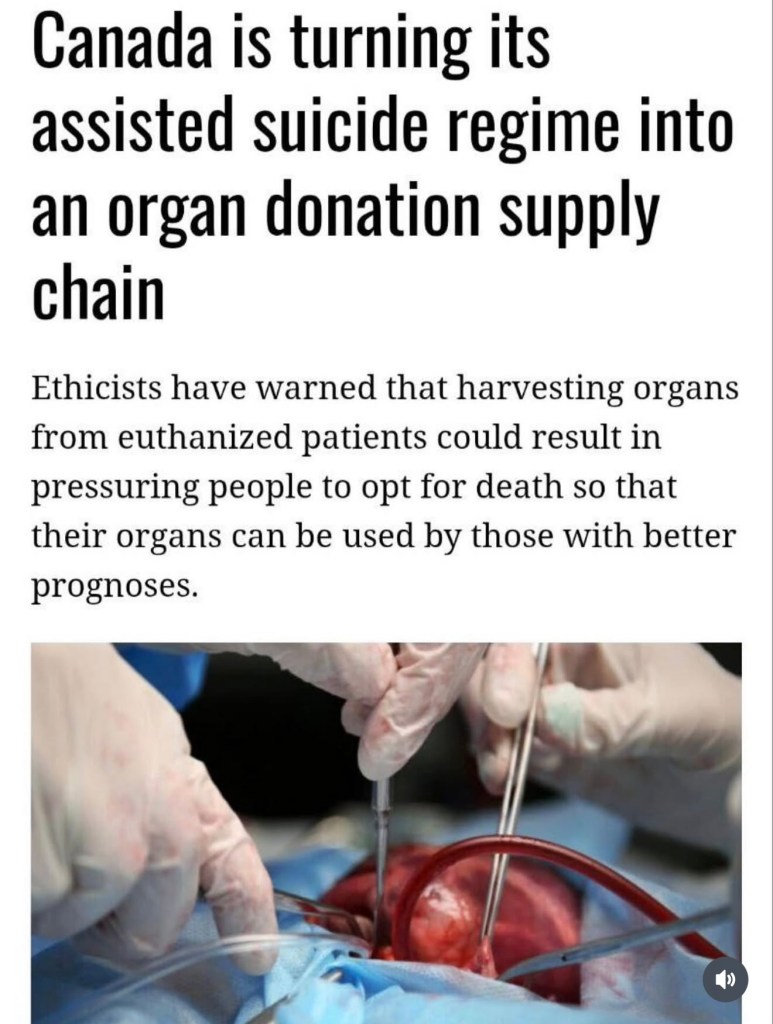
Canada has reached a moral crossroads. What began as legislation to end “unbearable suffering” through assisted suicide is now being intertwined with organ donation — turning death itself into a supply chain for the living.
Across the country, more Canadians who choose Medical Assistance in Dying (MAiD) are also donating their organs. According to national transplant data, Canada now leads the world in organ donations that follow euthanasia. Quebec alone has reported that up to 8 percent of its total organ donors in recent years were euthanized patients.
At first glance, this may sound noble — the idea that one person’s death could give life to another. But beneath the surface lies a deeply troubling ethical and spiritual reality.
When “Choice” Becomes Pressure
Proponents of MAiD argue that this practice simply extends autonomy: if someone freely chooses death, why not allow their final act to help others? But autonomy, when distorted by despair or social expectation, becomes something else entirely.
What happens when the sick, the disabled, or the elderly begin to feel a quiet pressure — that their death would be “useful,” that their organs might “do more good” in someone else’s body than their life could in their own frailty?
This is not freedom. It’s moral coercion wrapped in compassion’s clothing. It’s the voice of the culture of death whispering, “You’re worth more dead than alive.”
A Dangerous Reversal of Values
When society begins to view death as a public service and the body as a commodity, we invert the sacred order God established. Human life ceases to be a divine gift and becomes a utilitarian calculation — a trade between those deemed “productive” and those deemed “expendable.”
From a Christian perspective, every person bears the image of God from conception until natural death. The commandment “Thou shalt not kill” does not come with an asterisk for convenience or compassion. To end life deliberately, even with consent, and then to harvest organs from that act, crosses a line that cannot be easily uncrossed.
The Slippery Slope Has Become a Highway
When MAiD was first introduced in 2016, it was meant for terminally ill adults whose deaths were “reasonably foreseeable.” By 2021, Bill C-7 expanded it to those whose deaths were not imminent. Now, legislators are debating whether those with mental illness should also qualify.
With each expansion, the rationale widens — and so does the pool of potential organ donors. What began as a tragic exception is fast becoming a normalized pathway, and that normalization threatens the conscience of an entire nation.
The Forgotten Option: Accompaniment, Not Abandonment
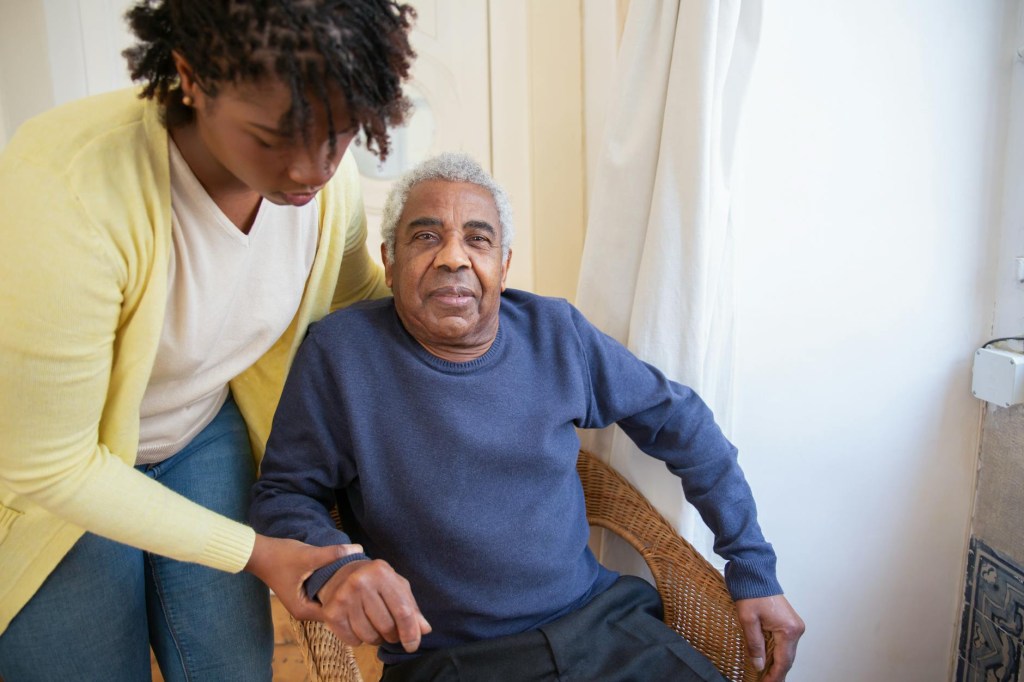
Many who request euthanasia are not crying for death; they are crying for help — for relief from pain, loneliness, or fear. True compassion does not eliminate the sufferer; it accompanies them through their suffering.
In every hospice room, hospital bed, or nursing home, there lies a sacred opportunity: to affirm the dignity of the person, to provide palliative care, to pray, and to witness to the love of Christ who meets us in our agony.
If Canada invested as heavily in palliative care as it has in expanding assisted suicide, how many hearts might rediscover hope?
A Call to the Faithful
This moment demands courage from the Church. We must be willing to speak truth with love — not out of judgment, but out of fidelity to the Gospel of Life.
Educate your parish and community about the moral implications of MAiD and organ harvesting.
Advocate for life-affirming care and ethical medical policy.
Accompany the suffering with compassion, prayer, and presence.
Proclaim that every breath of life — even in suffering — has infinite worth before God.
Redeeming the Narrative
Organ donation, when freely chosen after natural death, is a profound act of love. But when it is tethered to a system that deliberately ends life, it becomes something else — a transaction born of despair, not hope.
The real measure of a compassionate society is not how efficiently it manages death, but how faithfully it upholds life.
May Canada remember the words of Our Lord: “Whatever you did for one of the least of these brothers and sisters of mine, you did for me.” (Matthew 25:40)
And may we, as people of faith, never grow silent when life itself is on the line.
Citations:
Catholic News Agency, “Euthanasia Increases Organ Donations in Canada Amid Ethical Concerns”
National Post, “Ethicists Warn Organ Donation May Pressure MAiD Patients”
Lifesite News, “Canada’s Organ Donation System Now Linked to Euthanasia”
Journal of the American Transplantation Society (2024): Organ Procurement After MAiD
About the Author
Elizabeth Sutcliffe is a Catholic speaker, post-abortive advocate, and pro-life educator. Through her ministry, Elizabeth Speaks Truth, she shares her testimony of healing and hope after abortion, offering a compassionate message rooted in faith, mercy, and the sanctity of every human life. Elizabeth has spoken to thousands across Canada and the United States, inspiring audiences to choose life, rediscover faith, and find healing in Christ.
Connect with Elizabeth and explore her socials, latest talks, workshops, videos, and podcast episodes through her Linktree: 👉 linktr.ee/ElizabethSpeaksTruth
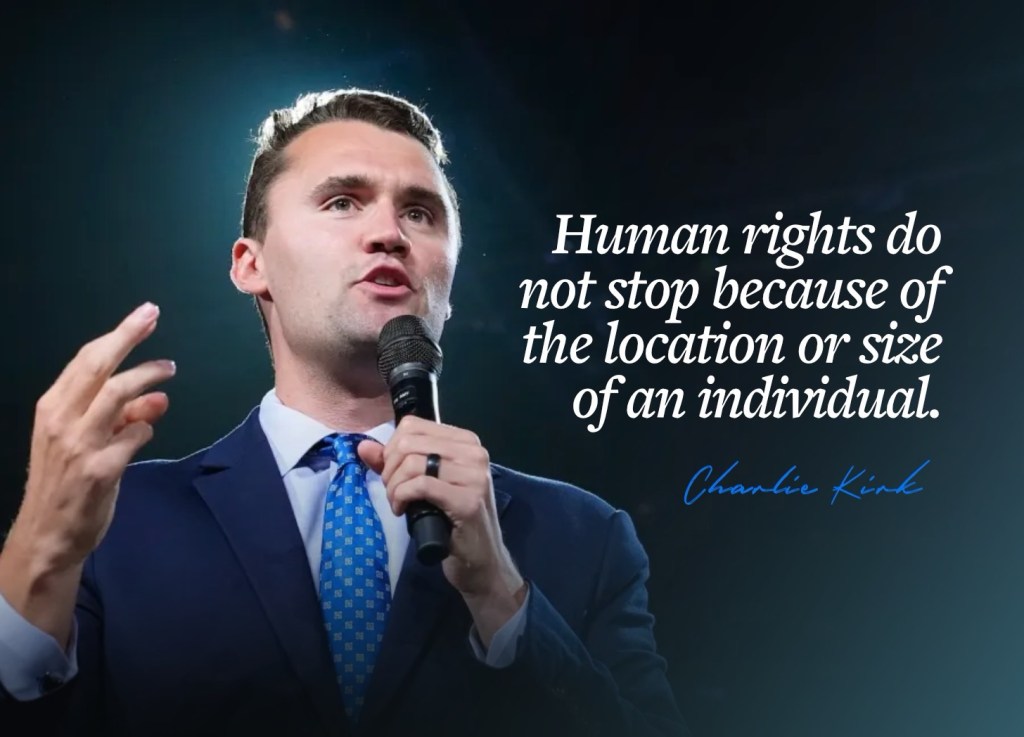
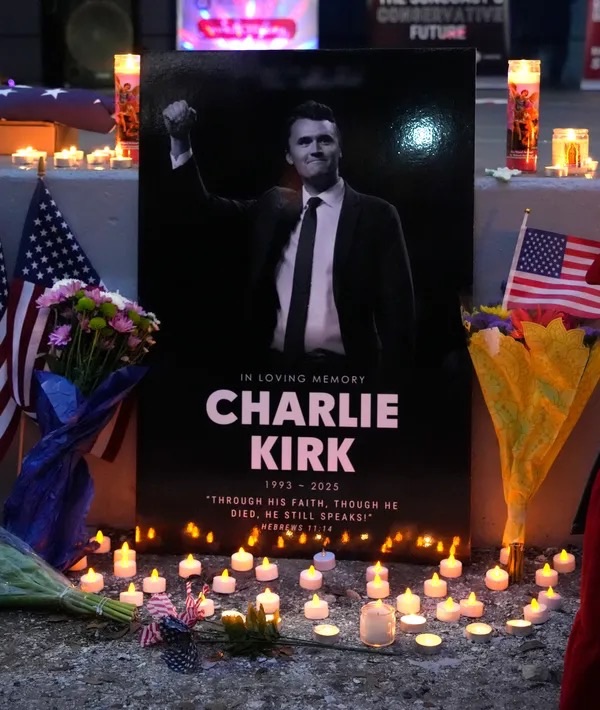
When I first heard Charlie Kirk speak about the value of every human life, I recognized something deeper than politics. Beneath his bold words and unapologetic tone was a conviction that echoed what the Catholic Church has proclaimed for centuries — that every human being is made in the image and likeness of God, and that the measure of a society is how it treats its most vulnerable.
Charlie Kirk may not have called himself Catholic for most of his public life, but his message was undeniably rooted in truths that the Church has safeguarded for two thousand years. He spoke often about the sanctity of life, the battle for souls, and the collapse of moral order in a culture that has forgotten God. And in the end, it seems he was on a journey toward the fullness of that truth — one that led him closer to the Catholic faith he so often defended.
A Voice for Life in a Culture of Death
Charlie understood that abortion is not merely a political issue — it’s a spiritual one. He called abortion “the greatest moral crisis of our time” and compared it to a modern holocaust, pointing out how our society justifies the killing of the innocent under the banner of “choice.” His passion for protecting life was not born out of sentimentality, but out of a clear recognition of reality: when a nation legalizes the destruction of its own children, it forfeits its moral authority.
He spoke to students on campuses across North America — places that have become breeding grounds for relativism and Marxist ideology — and he dared to challenge the lies they had been taught. He confronted them with truth, often with facts, always with conviction. He didn’t shy away from uncomfortable conversations. Instead, he stepped directly into them, reminding young people that the worth of a human life is not up for debate, and that real freedom is found not in doing whatever we want, but in doing what is right.
The Roots of a Catholic Heart
Toward the end of his life, several close to Charlie shared that he had been deeply drawn to the Catholic Church. He had spoken of his admiration for Mary, the saints, and the Church’s unbroken teaching on moral truth. That longing makes sense — because once a person begins to search for the fullness of truth, the path inevitably leads home to the Church Christ founded.
The pro-life cause, at its heart, is not about politics. It’s about the Gospel — the good news that every human being is sacred, that suffering has meaning, and that death does not have the final word. Charlie’s message, though often expressed in the language of activism, pointed toward these eternal truths. And for that, many Catholics — myself included — saw him as an ally in the battle for life and truth.
Confronting the Lies of Communism and the Culture of Death
Kirk often spoke of what he called the “culture of death” — a worldview that flows from atheism, materialism, and the false promises of communism. He recognized that Marxist ideology, in all its modern disguises, seeks to erase God, redefine morality, and pit people against one another. When the soul of a nation is corrupted by this kind of thinking, the dignity of the human person is the first casualty.
Communism tells us that human beings are merely economic units. Modern progressivism tells us that identity is self-invented. Both lead to despair. Charlie’s antidote was simple and profoundly Christian: reclaim truth. He urged young people to stand firm in the belief that life is sacred, that truth is objective, and that courage is contagious. Whether he realized it or not, he was echoing Pope John Paul II’s call to “be not afraid.”
A Legacy that Points to Heaven
In a world that rewards silence and punishes conviction, Charlie Kirk dared to speak. He didn’t always say it perfectly — few of us do — but he said it when it mattered most. And he reminded a generation drowning in confusion that there is still such a thing as good and evil, right and wrong, life and death.
For those of us in the pro-life movement, his courage should stir something within us. If Charlie — a young man who spent his life challenging lies on college campuses — could take the hits and keep speaking truth, then so can we. Our mission is not just to win arguments, but to win souls. And if Charlie’s journey truly was drawing him closer to the heart of the Catholic faith before his death, then perhaps his greatest work had only just begun.
May we honor his legacy not by merely remembering his words, but by living them — boldly, faithfully, and without compromise.
“Do not be overcome by evil, but overcome evil with good.” — Romans 12:21
Author’s Note
As a Catholic speaker and post-abortive advocate, I share Charlie’s conviction that truth must be spoken — especially when it’s unpopular. Like him, I believe that reclaiming a culture of life begins with courage: the courage to love, to forgive, to defend the innocent, and to confront evil with grace. My mission through Elizabeth Speaks Truth is to help others see that God’s mercy is greater than our sin, and that no one is beyond His healing.
From silence to strength — I speak so others know they’re not alone.
By Elizabeth Sutcliffe | Catholic Speaker | Post-Abortive Advocate | Pro-Life Educator
A groundbreaking new study out of Quebec is shedding light on an issue many of us in the pro-life and post-abortion healing community have long known through experience and testimony: abortion can leave deep and lasting mental health scars.
Published in 2025, this large-scale cohort study followed over 1.2 million pregnancies in Quebec hospitals from 2006 to 2022. The researchers specifically compared women who had an induced abortion to those who carried their pregnancies to birth or stillbirth. What they found is both sobering and validating.
📉 Key Findings at a Glance
Women who had an abortion were nearly twice as likely to be hospitalized for any mental health condition.
The greatest risk occurred in the first 5 years following an abortion.
Young women under 25 and those with preexisting mental health struggles were most vulnerable.
Risks gradually declined over time—but even up to 17 years later, some risks (especially substance use) remained elevated.
🧠 Why Does This Matter?
This study is the largest and longest of its kind in North America, offering 17 years of data and over 11 million person-years of follow-up. Unlike earlier studies limited to short-term outcomes or small sample sizes, this research confirms a consistent and measurable association between abortion and serious mental health struggles—especially when preexisting vulnerabilities are present.
While the study does not claim causation, it reinforces that abortion often intersects with complex emotional, psychological, and social factors, and may intensify existing mental health conditions or trigger new ones.
🧒 Young Women at Higher Risk
Notably, women under 25 who had abortions faced up to 2.75 times the risk of later mental health hospitalizations compared to those who gave birth. This highlights a critical need for better support and screening—especially for young women who may already be facing trauma, isolation, or lack of family stability.
🔄 The Impact of Repeat Abortions and Prior Births
The study also found that women who had previous live births or repeat abortions had higher risks of long-term mental health complications. While the reasons aren’t fully clear, it may reflect the compounded emotional weight of grief, maternal guilt, or unresolved trauma.
🧩 What Can We Do With This Information?
This study offers powerful, data-driven insight that supports what many post-abortive women have bravely shared for years: abortion can hurt. And that pain can last.
But it also offers us a way forward.
Here’s what we can do:
Advocate for mental health screenings at abortion clinics and hospitals.
Offer compassionate, nonjudgmental support to women who are post-abortive—especially in the early years after abortion.
Provide resources for healing: post-abortion counseling, retreats, spiritual support, and community.
Educate the public, our churches, and young people about the full picture—not just physical outcomes, but emotional and spiritual ones too.
Empower women with alternatives to abortion that affirm their dignity, their motherhood, and their mental well-being.
🤍 A Word From My Heart
As someone who has walked this road personally, I know the internal scars that abortion can leave. This study doesn’t just speak to data—it speaks to lives. To women like me. To stories like mine. To the thousands of women I’ve spoken to over the years who thought they were alone in their pain.
You are not alone. You are not beyond healing. And your story matters.
📚 Source
Auger, N. et al. (2025). Induced abortion and long-term risk of mental health hospitalization: A 17-year cohort study in Quebec. [Journal info here]
✉️ Let’s Talk
If this post has touched you, or if you’re looking for support, healing, or a speaker to share this message of truth and hope, reach out.

 Elizabeth Sutcliffe