Did you know that the chemicals used in abortion pills—particularly mifepristone—could be making their way into our water supply? As the use of chemical abortions skyrockets, so does the risk of these drugs entering wastewater systems, eventually contaminating rivers, lakes, and even tap water.
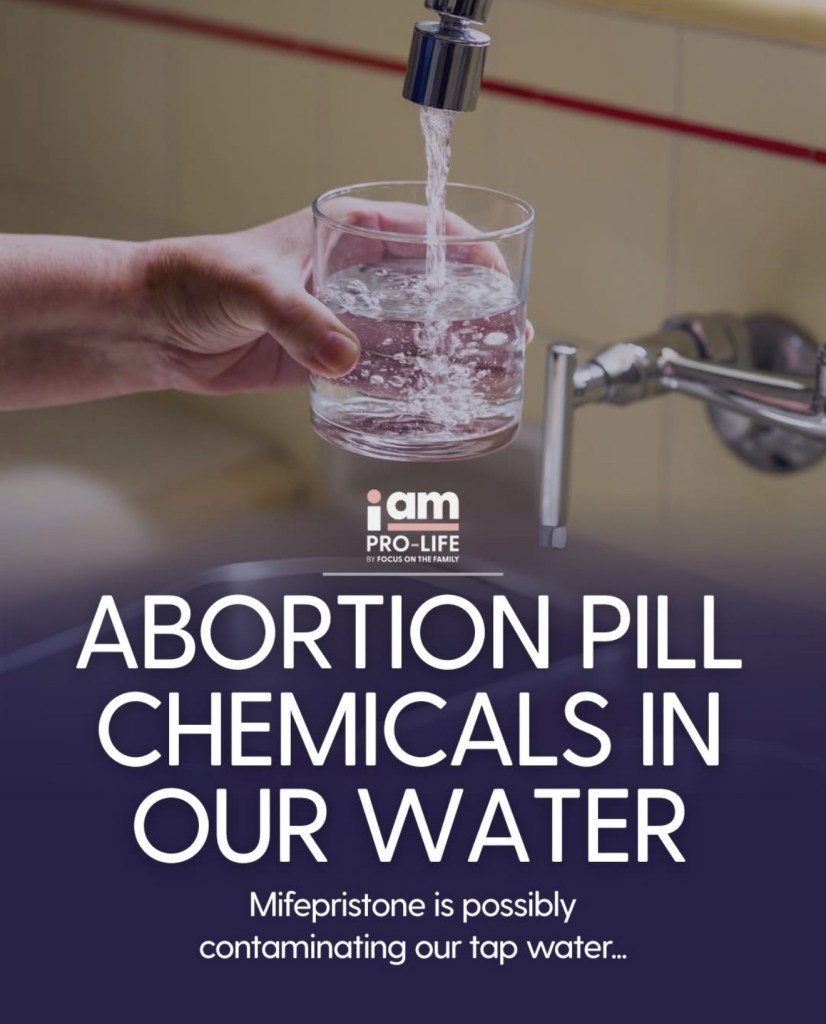
This is more than just a pro-life issue—it’s a public health concern. Mifepristone is designed to disrupt pregnancy by blocking progesterone, a vital hormone for sustaining life. What impact could these hormone-blocking chemicals have on the environment, wildlife, and, ultimately, us? No one is asking these questions loudly enough.
This is yet another reminder of how abortion doesn’t just affect a mother and her unborn child. It leaves physical, emotional, and spiritual consequences—and now, potentially, environmental ones as well.
As pro-lifers, we must not only speak out about the injustice of abortion but also raise awareness about these hidden dangers. It’s time to demand transparency, research, and accountability. Our health, our families, and our communities deserve better than chemical pollution in the name of “choice.”
Learn More
FDA Environmental Assessment (1996) – Original environmental assessment of mifepristone.
Sen. Lankford’s Call for Updated EPA Review – U.S. lawmakers urging investigation.
Politico: Abortion Pill and Environmental Law – Discussion on growing environmental concerns.
PolitiFact Fact-Check – Experts weigh in on what’s known (and unknown) about risks.
Washington Examiner Report – On wastewater treatment and trace contamination.
Take Action
✅ Pray for a culture that values life and protects creation.
✅ Share this article to help others understand the hidden costs of chemical abortion.
✅ Speak up—contact your local representatives and ask for updated research and stricter environmental safeguards.
Together, we can defend life and protect the world we live in.
 Elizabeth Sutcliffe